


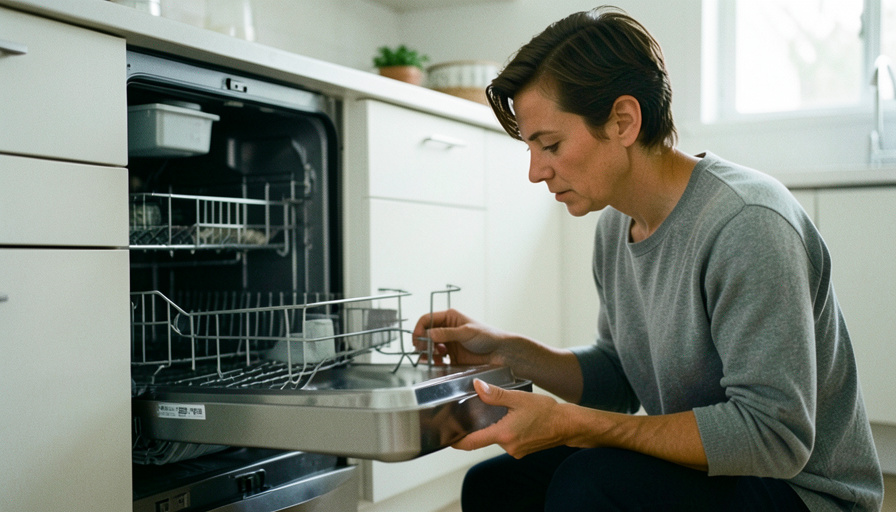
A blinking dishwasher code usually points to a clogged filter or a kinked hose, not a dead pump, so read the code before you book a service call.
Here is the pattern that costs people the most money. A code flashes, it looks catastrophic, and a technician gets booked for what turns out to be a filter you can rinse in the sink. Dishwasher error codes are diagnostic hints, not verdicts, and the same two letters can mean completely different things on a Bosch versus a Samsung. Below are 12 of the most misread codes across the big brands, what people assume each one means, and the one-minute check to run before anyone opens the toolbox.
Most dishwasher error codes trace back to four cheap, fixable things:
- The filter — the clogged mesh filter sitting at the tub floor.
- The drain path — a kinked hose, or a garbage-disposal knockout plug left in place.
- The water supply — a half-closed shutoff valve or a pinched inlet hose.
- The door latch — a door that never quite clicked shut.
Quick Picks: 12 codes at a glance
| Brand & code | What people assume | What it usually means | 1-minute check |
|---|---|---|---|
| Bosch E15 | Flooded, dead machine | Float tripped by water in the base tray | Tilt back, drain tray, wipe dry |
| Bosch E24 / E25 | Drain pump failed | Clogged filter or kinked drain hose | Rinse the filter, straighten the hose |
| Samsung 5C / 5E | Control board fault | Drain blockage or disposal plug left in | Clean filter, check disposal knockout plug |
| Samsung 4C / 4E | Broken water valve | Water supply not reaching the tub | Open the shutoff valve fully |
| Samsung LC / LE | Major leak | Leak sensor tripped by a drip or suds | Dry the base, cut detergent amount |
| LG IE | No water, broken unit | Not filling fast enough in time | Open valve, clear the inlet screen |
| LG OE | Pump dead | Drain issue or hose loop height | Clean filter, check the high loop |
| LG CL | An error or dead buttons | Control lock is switched on | Hold the lock button ~3 seconds |
| Whirlpool F8 E1 / F9 E1 | Motor or board failure | Water not draining | Clear filter, hose, and disposal plug |
| Whirlpool blinking light | Cycle finished, random | A fault told by blink count | Power-cycle, count blinks vs manual |
| GE H2O / low water | Valve failure | Low fill from supply or pressure | Open supply fully, straighten hose |
| GE C4 / failure to drain | Pump replacement | Drain clog or door not latched | Clean drain path, push door to click |
Table of Contents
1. Bosch E15: water in the base, not a dead pump

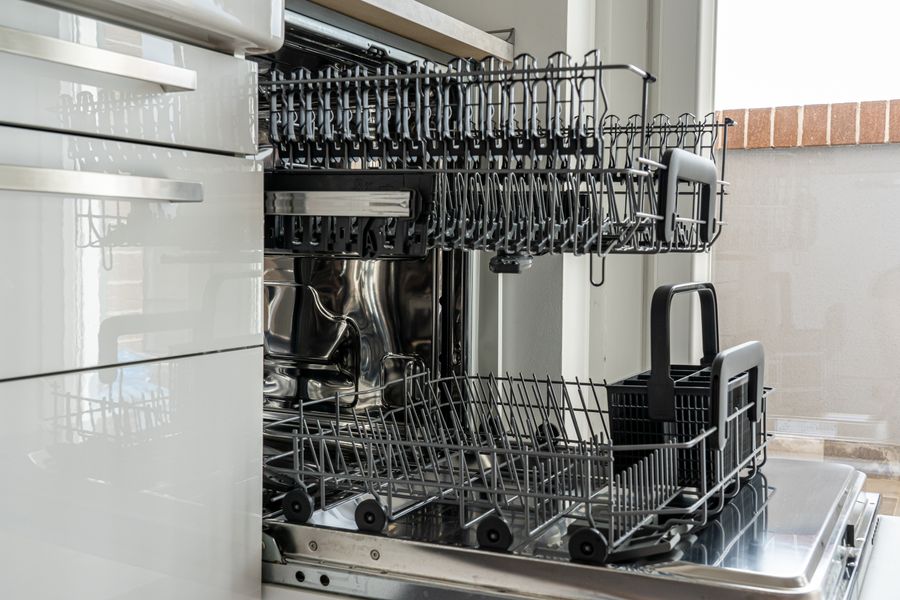
E15 sets off alarm bells because the machine locks up and often keeps running the drain pump. What actually happened is smaller: a safety float in the base pan sensed water and shut things down, sometimes from a single spill or a burst of foam when someone used regular dish soap. Bosch’s own guidance treats it as a leakage-protection trip, not a broken part, in its E15 support notes.
1-minute check: Tilt the machine back about 45 degrees for 20 to 30 minutes so the tray drains, wipe the base dry, and run a short rinse. Use only dishwasher detergent going forward, since sudsing soap is the usual trigger.
2. Bosch E24 and E25: a filter problem wearing a scary code
These two read like a pump obituary. In practice E24 points to water that cannot leave, and the cheapest cause sits right at the bottom of the tub. Bosch lists a blocked drain filter as the first thing to check for error code E24, with E25 leaning toward the pump or a kinked hose.
1-minute check: Twist out the cylindrical mesh filter at the tub floor, rinse it under the tap, and clear any food or glass. Then straighten the drain hose behind the unit so it is not pinched against the cabinet.
3. Samsung 5C and 5E: the disposal plug nobody removed
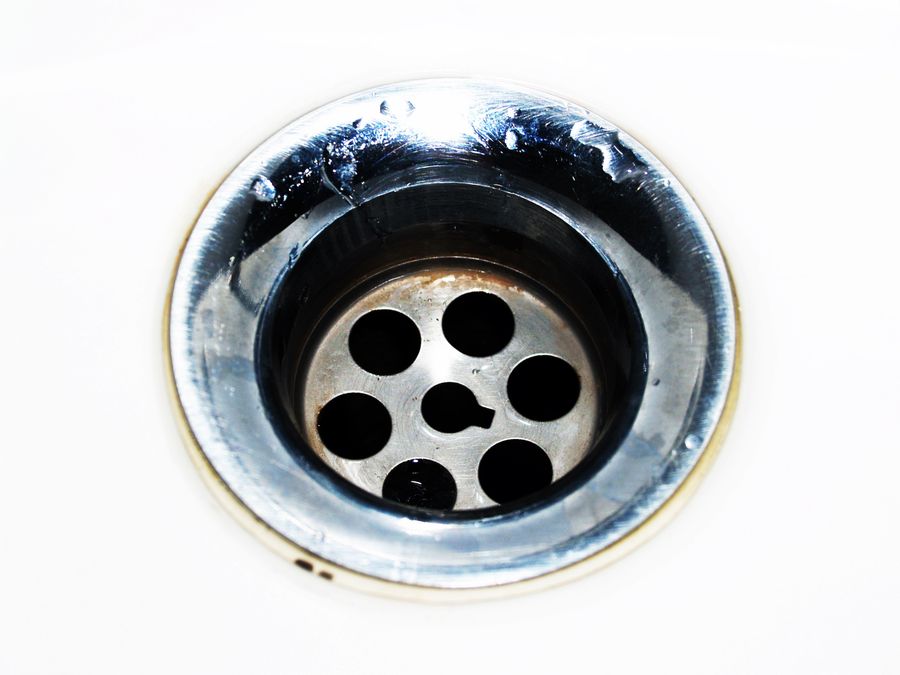
Samsung’s 5C and 5E both mean the dishwasher cannot drain, and people assume the control board died. On a recently installed machine, the real culprit is often a plastic knockout plug still sitting inside the garbage disposal inlet, which blocks the drain hose entirely. Samsung groups these water codes together in its dishwasher error code guide.
1-minute check: Clean the filter, then look where the drain hose meets the disposal. If you never punched out the knockout plug during install, that is your answer. Also check the hose is not sitting in standing water.
4. Samsung 4C and 4E: the machine is thirsty, not broken
4C and 4E signal that water is not arriving fast enough, which reads as a failed valve. Most of the time the water simply cannot get in. A shutoff valve under the sink got bumped half-closed, an inlet hose kinked, or the little inlet screen clogged with mineral grit.
1-minute check: Open the supply valve all the way, then feel the inlet hose for a kink. In winter, a hose run through an unheated wall can freeze, so warm the line if the kitchen backs onto an exterior wall.
5. Samsung LC, LE, and 1E: a leak sensor doing its job
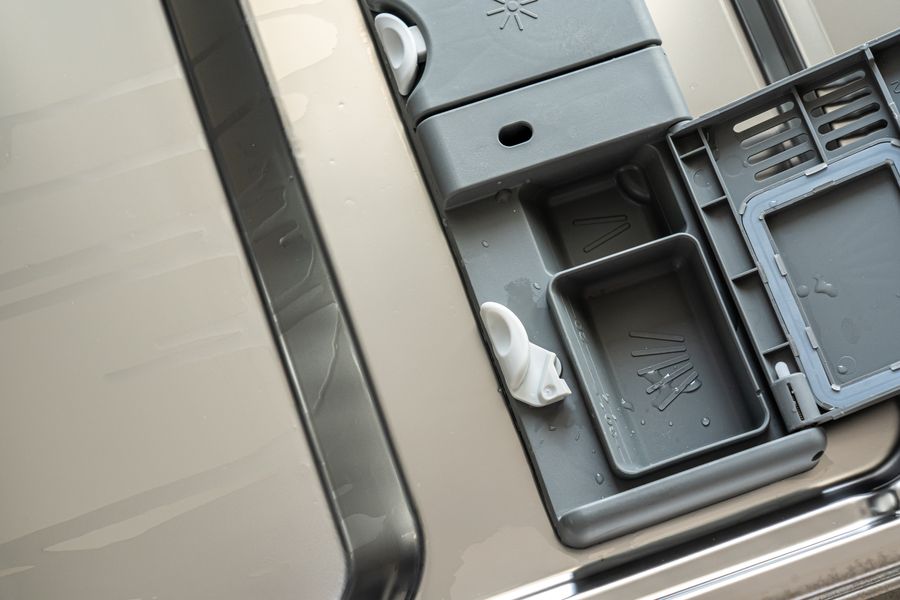
A leak code feels like an emergency, and sometimes it is. Often, though, the sensor tripped on a few drops of condensation or a suds overflow rather than a burst seal. The fix is to figure out whether the drip repeats.
1-minute check: Pull the bottom rack, sponge the base pan dry, and cut your detergent to a tablespoon. Run a rinse cycle and watch. If LC returns with a dry base, then it is worth calling a pro to trace the seal or hose.
6. LG IE: filling, just too slowly
LG’s IE code appears when the tub does not reach its water level within about ten minutes of filling. Owners read that as a broken machine, when the tap side is usually the weak link. Low household pressure, a throttled valve, or a clogged inlet screen all starve the fill.
1-minute check: Open the shutoff valve fully and clean the mesh inlet screen where the hose connects. If a nearby faucet also dribbles, the problem is your home’s water pressure, not the dishwasher.
7. LG OE: drainage, and a hose that sits too low
OE is LG’s drain error, and the assumption is always a dead pump. The filter and the drain hose routing solve it far more often. A drain hose that runs flat or dips below the tub lets dirty water siphon back, and the machine flags it.
1-minute check: Rinse the filter, then confirm the drain hose rises into a high loop under the counter before it drops to the disposal or standpipe. That loop is what stops backflow.
8. LG CL: not an error at all
CL sends people into a panic because the buttons stop responding, and it looks like a board failure. It is the control lock, a child-lock feature that got switched on by accident. Nothing is broken.
1-minute check: Find the button printed with a lock icon, often shared with a cycle key, and hold it for about three seconds until CL clears. The exact key varies by model, so glance at the control panel legend.
9. Whirlpool F8 E1 and F9 E1: drain codes in disguise
Whirlpool and KitchenAid split faults into an F (function) and an E (component) number, which looks intimidating. F8 E1 and F9 E1 both point at water that is not draining. The path from the filter to the disposal is where you win this one.
1-minute check: Clean the filter assembly, clear the drain hose, and check the disposal knockout plug on newer installs. A quick power-cycle at the breaker clears the code once the blockage is gone.
10. Whirlpool blinking clean or start light: a code in Morse
When the Clean light or Start light flashes instead of showing text, owners assume the cycle just ended or the panel glitched. Many Whirlpool dishwashers report faults through blink counts, so a set number of flashes maps to a specific problem, often the heating element or a stuck cycle.
1-minute check: Count the flashes in one burst, then match that number against your model’s manual or the door-jamb sticker. Power the unit off at the breaker for five minutes first, since a stuck cycle often clears on its own.
11. GE H2O: low water, usually from the tap side
GE’s H2O message reads as a valve failure, but it means the dishwasher did not get enough water. The supply is the first suspect: a shutoff turned down after some plumbing work, a kinked inlet hose, or genuinely low pressure in an older home.
1-minute check: Open the supply valve fully and straighten the inlet hose. If your kitchen faucet also runs weak, the fix is a pressure issue upstream, not the appliance.
12. GE C4 and failure-to-drain: check the door before the pump
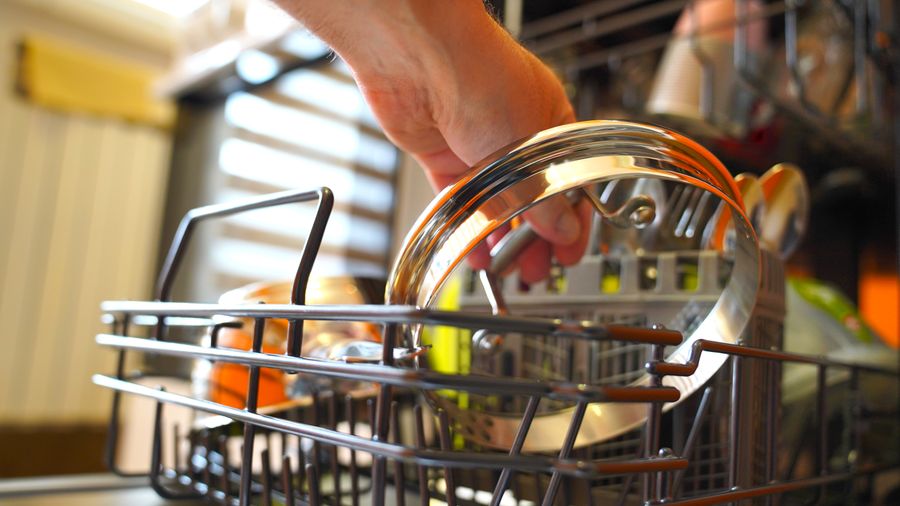
A drain code on a GE sends people straight to pump-replacement quotes. Two cheaper things come first: a clogged drain path, or a door that did not fully latch, which quietly stops the cycle. GE’s support pages walk owners through the drain checks before any parts, and its full dishwasher error guidance starts there.
1-minute check: Clean the filter and drain hose, then push the door firmly until it clicks. An overloaded bottom rack can hold the door a few millimeters open, which is enough to confuse the cycle.
How We Chose These
These 12 made the list because they show up constantly in owner forums and brand support pages, and because the gap between what the code seems to say and what it usually means is wide enough to cost a needless service call. We prioritized codes that a homeowner can safely check in a minute without tools or a technician, and we leaned toward the drain, filter, water-supply, and door faults that repeat across brands rather than rare board-level failures. Codes tied to genuine electrical or motor faults were left for a professional, on purpose.
The Bottom Line
If you take one habit from this, make it this order: clean the filter, check the drain path, confirm the door clicked, then look at the water supply. That sequence resolves the large majority of the codes above before you spend a cent. Bosch E15 and Samsung LC are the two worth watching, since a code that returns with a dry, clean base is the point where a repair visit earns its fee. For more appliance and repair guides, browse Visboo’s Home Improvement section, and if the filter is the culprit, our guide to cleaning overlooked items in the home covers how often to do it.
Turn off power at the breaker and shut the water supply before any work beyond a filter rinse or hose check. If a code returns after these checks, or you smell burning or see standing water that will not clear, call a qualified appliance technician.
Frequently Asked Questions
What does a dishwasher error code actually mean?
A dishwasher error code is the machine’s shorthand for which sensor tripped, not a diagnosis of a broken part. Most codes report a drain, fill, leak, or door problem, and the underlying cause is usually a clog, a kink, or a latch rather than a failed motor or board.
Are dishwasher error codes the same across brands?
No, and this is where people go wrong. The same characters mean different things by brand: an “OE” is a drain error on LG, while Bosch uses E-numbers and Samsung uses letter-number codes like 5C. Always match the code to your specific brand’s list before acting.
Why does my dishwasher keep showing a drain error after I cleaned the filter?
Check the parts of the drain path beyond the filter. The most common misses are a kinked drain hose, a hose that lacks a high loop under the counter, and a garbage-disposal knockout plug that was never removed during installation.
Can I reset a dishwasher error code myself?
Often yes. Turning the dishwasher off at the circuit breaker for about five minutes clears many transient codes once the real problem is fixed. If the code returns immediately, the fault is still present and needs the check for that specific code.
When should I stop troubleshooting and call a technician?
Call a pro if a leak or drain code returns after you have cleaned the filter and cleared the hose, if you see scorching or smell burning, or if water pools in the base and will not drain. Those point to seal, pump, or electrical faults that are not a safe one-minute fix.