


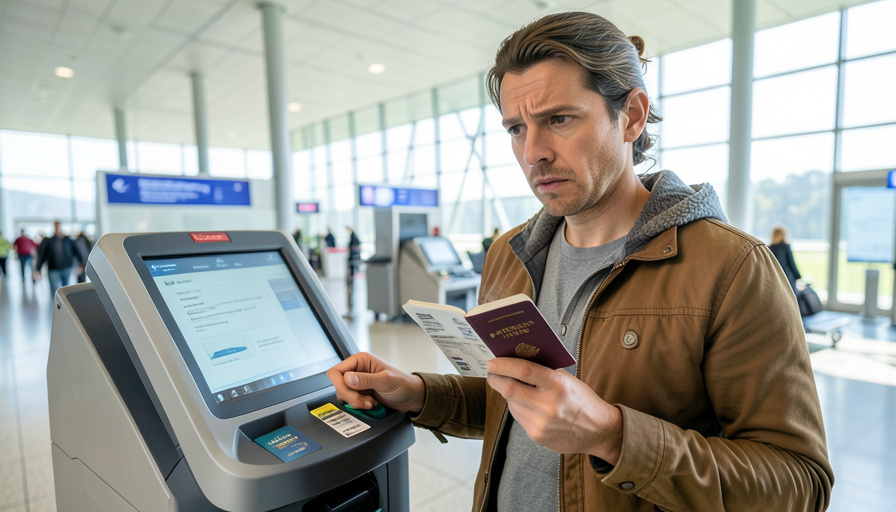
The name on your boarding pass and the name in your passport do not have to be identical, which surprises a lot of nervous travelers. What matters to the check-in system is a specific core: first name, last name, date of birth, and gender. Get those right and a missing middle name or a dropped accent almost never stops you. Get the core wrong, and you can be stuck at the counter buying a fix you did not budget for. Here are 9 common name mismatches, whether each one is a real problem, and the exact move to make for each.
The goal is to sort the harmless differences from the ones that need a phone call, so you spend your energy only where it counts. Most of these you can settle from your couch days before the trip.
The Short Version
Under the U.S. Secure Flight program, the name on your reservation needs to match the ID you travel with on first name, last name, date of birth, and gender. Middle names, middle initials, suffixes, accents, hyphens, and apostrophes rarely cause a block on their own, because the airline transmits your full passenger data and a screening officer sees it. The mismatches that matter are a wrong or badly misspelled first or last name, and, for international trips, anything that does not match your passport. Small typos get a free correction from the airline. A legal name change may need a reissue with documents.


The 9 mismatches at a glance
- A missing or extra middle name
- A middle name spelled out versus a middle initial
- Maiden name on the ticket, married name on the passport (or the reverse)
- A hyphenated last name that got split or joined
- Two last names with no hyphen
- A suffix like Jr. or III on your ID but not the ticket
- Accents and special letters your booking site stripped
- Apostrophes and spaces in a surname
- An outright typo in the booking
1. A missing or extra middle name
This is the most common worry and the least likely to matter. If your passport lists a middle name but your ticket does not, or your ticket has one your ID leaves off, Secure Flight still clears you as long as first name, last name, date of birth, and gender line up. The airline sends your booking data to the government, and the officer checks that record, not just the printed pass. For a domestic U.S. flight, you can usually leave it alone. The fix, if you want one, is a quick call to the airline to add or drop the middle name, which most will do at no charge.
2. A middle name spelled out versus a middle initial
A ticket that shows “A” where your passport says “Andrew,” or the other way around, sits in the same harmless bucket. A middle initial standing in for a full middle name, or a full middle name where the ID shows an initial, is a recognized minor variation and does not typically stop boarding. Leave it for a domestic trip. If you are flying internationally and it bothers you, ask the airline to align the middle name to the passport before you go, since border systems abroad can be fussier than a domestic gate.
3. Maiden name on the ticket, married name on the passport

This is the mismatch that trips people up for real, usually right after a wedding or a divorce. The rule is simple: your ticket should match the ID you will hand over at the airport. If your passport still shows your maiden name, book and fly under the maiden name, even if you now use a married name day to day. If your passport already shows the new name, the ticket needs to match that. When a ticket is booked in the wrong one, call the airline. A legal name change is corrected with documentation such as a marriage certificate or court order, and depending on how different the names are, it may be handled as a correction or a full reissue.
4. A hyphenated last name that got split or joined
Hyphens confuse booking forms constantly. A surname like Garcia-Lopez might land in the system as “GarciaLopez,” “Garcia Lopez,” or just one half. For domestic travel this rarely blocks you, since the core still matches closely. For international travel, match the exact format in your passport, hyphen and all, because the airline sends that name to border authorities. If the booking dropped a piece of your last name entirely, treat that as a real error and call the airline to correct it before you fly.
5. Two last names with no hyphen
Many travelers, especially with Hispanic or Portuguese naming, carry two surnames and no hyphen between them. The safe move is to enter both exactly as they appear in the surname field of your passport, even if a form seems to want just one. Putting only one of two surnames on the ticket is the kind of gap that can slow an international check-in, because it no longer matches the passport. Domestically it is usually fine, but for any trip crossing a border, copy the passport’s last-name field character for character.
6. A suffix like Jr. or III on your ID but not the ticket

Suffixes are the wild west of airline forms. Many systems have no field for Jr., Sr., II, or III, so they get dropped, and that is entirely expected. A suffix on your passport that is missing from your ticket almost never causes a problem, at home or abroad. If your booking did squeeze a suffix into the last-name field and it reads oddly, you can ask the airline to clean it up, but this is close to a non-issue. Spend your attention on the first and last name instead.
7. Accents and special letters your booking site stripped
If your name has an accent or a letter outside plain English, like José, Muñoz, or Müller, most booking systems store a stripped version: Jose, Munoz, Muller or Mueller. This is standard, because passports carry a machine-readable zone that already spells your name in plain Latin letters for exactly this reason. The transliterated form on your ticket matching that plain version is normal and accepted. The safest habit is to book using the same spelling that appears in the machine-readable line at the bottom of your passport photo page, and you will match every system down the line.
8. Apostrophes and spaces in a surname
Names like O’Brien, D’Angelo, or van der Berg meet the same stripping. A booking system may store “OBrien” or “Vanderberg,” closing up the apostrophe or the spaces. Like accents, this is a recognized minor variation and does not usually stop you, since the letters still match in order. For international travel, again defer to the machine-readable zone of your passport, which shows how your surname is rendered without punctuation, and book to match that. Domestically, a missing apostrophe is nothing to worry about.
9. An outright typo in the booking
This is the one to fix. A genuine misspelling in your first or last name, “Jonh” for “John,” or a wrong letter that changes the name, is different from a dropped accent or middle name. A wrong core name can fail the match and strand you at check-in. The good news is that airlines allow free minor name corrections, often up to about three characters, when you catch a typo. Call the airline as soon as you notice, well before check-in, and have them fix it. Do not wait for the airport, and never assume a staffer at the gate can override a real name error on the spot.
How to decide: leave it, correct it, or reissue
Sort any mismatch into one of these and you will know what to do:
- Leave it. Missing or extra middle name, middle initial, suffix, accent, apostrophe, or spacing. The core matches, so you are fine, especially on a domestic trip.
- Correct it. A typo in your first or last name. Call the airline for a free minor name correction, the sooner the better.
- Reissue with documents. A legal name change from marriage or divorce, where the ticket and your current passport show different names. Bring the certificate or court order, or fly under the name your passport shows.
- Match the passport for any international trip. Border systems compare your ticket to your passport, so copy the passport’s name fields exactly, punctuation and all.
Two authorities worth a look are the plain overview of the Secure Flight program that governs domestic name matching, and the Advance Passenger Information System, which is why an international ticket has to line up with your passport.
This article is general guidance, not official airline or government policy, and rules vary by airline, route, and country. Correction windows, fees, and documentation can differ. Confirm the specifics with your airline and, for international trips, check the entry requirements for your destination before you travel.
What To Know
- Secure Flight matches first name, last name, date of birth, and gender, so a missing middle name usually does not block you.
- Suffixes, accents, apostrophes, and hyphens are minor variations that rarely stop a domestic check-in.
- A real typo in your first or last name is the mismatch to fix, and airlines allow free minor corrections.
- After a marriage or divorce, fly under the name that matches your current passport, and correct the ticket with documents if needed.
- For any international trip, copy your passport’s name fields exactly, since the ticket is matched to the passport.
Frequently Asked Questions
Does the name on my ticket have to match my passport exactly?
Not exactly, but the core has to match. Secure Flight compares first name, last name, date of birth, and gender to the ID you travel with. Extras like a middle name, a suffix, an accent, or an apostrophe are recognized minor variations and rarely cause a problem on a domestic flight. For international travel, though, match your passport as closely as you can, because your ticket data is sent to border authorities who compare it to the passport.
I misspelled my name when booking. Will I be turned away?
Not if you fix it in time. A real typo in your first or last name can fail the check, so call the airline as soon as you notice. Most carriers allow a free minor name correction, often up to around three characters, when you contact them before check-in. Do not count on a gate agent to override a wrong name at the airport, and do not buy a new ticket before you ask about a correction.
I got married and my ticket has my maiden name. What do I do?
Fly under whichever name matches the passport you will carry. If your passport still shows your maiden name, keep the ticket in the maiden name. If your passport already shows your married name, the ticket needs to match that, so call the airline to correct it, with your marriage certificate ready. Airlines handle a legal name change as a correction or a reissue depending on how different the names are.
My last name has an accent or an apostrophe that the site removed. Is that a problem?
Usually not. Booking systems routinely strip accents and punctuation, storing José as Jose or O’Brien as OBrien, and this matches the plain-letter version in your passport’s machine-readable zone. It is treated as a minor variation. To be safe on international trips, book using the exact spelling shown in the machine-readable line at the bottom of your passport photo page.
Can I just fix a name mistake at the airport?
Sometimes for a tiny issue, but do not rely on it. A dropped middle name needs no fix at all. A genuine misspelling of your first or last name should be corrected by phone before you go, because airport staff may not be able to change it quickly, and a busy check-in line is the worst place to discover the problem. Handle real name errors days ahead, not at the counter.

What To Do Next
Pull up your reservation and compare the first name, last name, date of birth, and gender against the ID you plan to travel with. If only a middle name, suffix, accent, or apostrophe differs, relax, especially for a domestic trip. If a core name is wrong, call the airline now for a correction rather than at the gate. For more trip prep, see our travel checklist for smarter packing, and the travel section has more.