


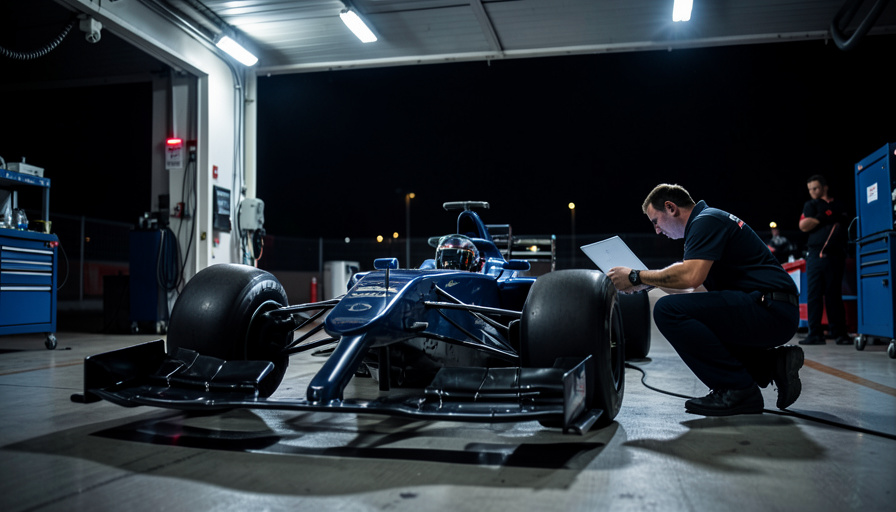
A driver puts together the lap of the weekend, celebrates, and then, hours later, the result quietly vanishes. No crash, no penalty on track. Just a line in a stewards’ document. Here is why Formula 1 throws cars out of qualifying.
Qualifying disqualifications feel harsh because they usually have nothing to do with driving. The lap was real; the problem is the car. After a session, officials weigh, measure, and inspect the machines, and if something breaks the rules, the time comes off the board no matter how brilliant the lap was. Understanding why turns a confusing headline into something that actually makes sense.
In Brief
Formula 1 disqualifies a driver from qualifying when their car fails a technical check after the session, not for anything they did on track. The common causes are an underweight car, a fuel irregularity such as exceeding the fuel-flow limit or failing to provide a fuel sample, and a part that does not comply with the rules, like a wing or a worn floor plank. The penalty is almost always the loss of the qualifying time, which sends the driver to the back of the grid or the pit lane for the race. Stewards typically have no discretion: a breach is a breach.
What Disqualification From Qualifying Actually Means
Getting excluded from qualifying is different from a grid penalty. A grid penalty drops you a set number of places. A qualifying disqualification wipes your session result entirely, which normally means starting from the very back of the grid, or from the pit lane if the team has to work on the car under closed conditions.
The driver keeps their reputation and their pace, but loses track position, which in modern F1 is often the whole race. Starting 18th instead of 3rd can turn a podium contender into a points long-shot before the lights even go out.
The Main Reasons a Car Gets Thrown Out
Most qualifying disqualifications trace back to one of a handful of technical checks.
| Reason | What it means |
|---|---|
| Underweight car | The car sits below the minimum weight limit when checked after the session |
| Fuel-flow breach | Fuel was delivered to the engine faster than the 100 kg/h limit allows |
| Insufficient fuel sample | The team cannot provide the required one-litre fuel sample for testing |
| Illegal part | A component such as a wing or floor fails the technical rules in scrutineering |
| Excessive plank wear | The wooden plank under the car is worn beyond the permitted limit, a sign it ran too low |
What ties these together is that they are measured, not judged. A scale reads a number, a sensor logs a flow rate, a gauge checks plank thickness. There is little room to argue intent.
A Real Example: Gasly’s Fuel-Flow Disqualification
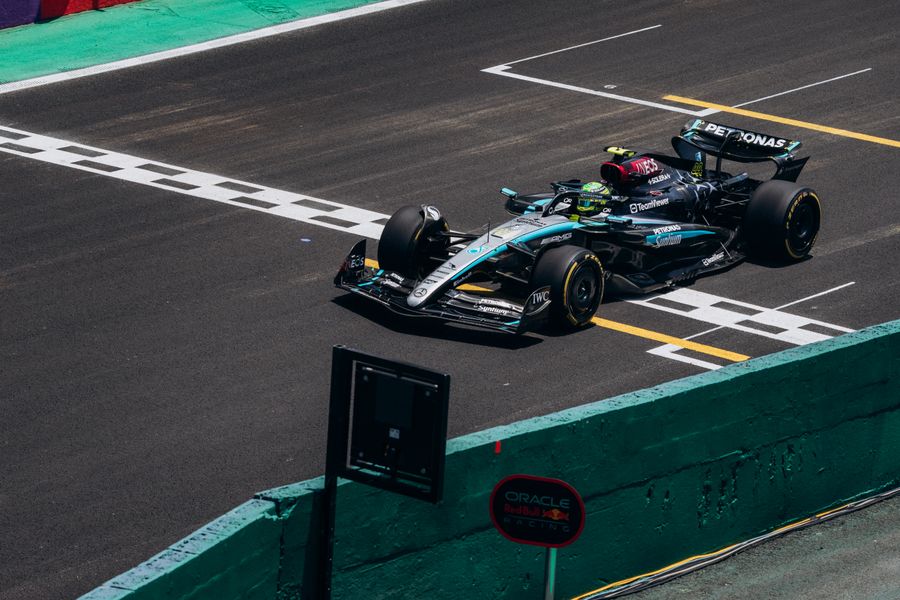
The clearest recent case is Pierre Gasly at the 2024 Azerbaijan Grand Prix. His car was excluded from qualifying after data showed the fuel mass flow exceeded the 100 kg/h maximum on his final timed lap, a breach of the technical regulations.
Tellingly, his team argued the cause was a brief technical fault that gave no performance benefit, and the officials broadly accepted the explanation, as Autosport reported. It did not matter. The rule sets a hard limit, the car crossed it, and the result was gone. Gasly, who had qualified well inside the top half, was sent to the back of the grid.

Why the Stewards Usually Have No Choice
This is the part fans find frustrating and teams accept grimly. For most technical breaches, disqualification is close to automatic. It does not require proof that the team cheated or gained an advantage. The car either meets the specification or it does not, and F1 polices that line hard precisely because a “small” technical edge, multiplied across a lap, is exactly what the rules exist to prevent.
That is why you often see a team publicly accept a disqualification even while insisting nothing was intentional. Intent is not the test. Compliance is.
What It Means for the Grid and the Team
One disqualification reshuffles everyone. Every driver who qualified behind the excluded car moves up a spot, which can hand a rival a better starting slot for free. For the disqualified team, it usually means a damage-limitation race from the back, leaning on strategy, tyre calls, and overtaking rather than track position. For related motoring coverage, see Visboo’s Autos section, and for more sport, browse the Sports section.
Frequently Asked Questions
What does it mean to be disqualified from qualifying in F1?
It means the car failed a technical check after the session, so the driver’s qualifying result is wiped out. They normally start the race from the back of the grid or the pit lane, regardless of how fast their lap was.
What are the most common reasons?
An underweight car, a fuel irregularity such as exceeding the 100 kg/h fuel-flow limit or failing to provide a fuel sample, or a part that does not comply with the rules, like a wing or an excessively worn floor plank.
Does the driver do anything wrong?
Usually not. Qualifying disqualifications are almost always about the car failing a technical requirement, not the driver’s on-track conduct. The lap itself was legitimate; the machine broke a rule.
Can a team appeal a qualifying disqualification?
Teams can lodge appeals, but for clear technical breaches the outcome rarely changes, because the rules set hard limits and the stewards have little discretion once a measurement shows a car is out of spec.
Why is it such a big deal if the lap was fast?
Because starting position matters enormously in modern F1. Losing a qualifying result can drop a driver from the front rows to the back, turning a likely strong result into a difficult recovery drive before the race even starts.
The Bottom Line
A qualifying disqualification is Formula 1 being ruthless about the rulebook rather than the driving. The lap was real, the talent was real, but the car has to pass every check, and if it fails one, the time disappears. It is a blunt system, and that bluntness is the point: in a sport decided by fractions of a second, the only fair edge is the one the rules allow.