



A styling tool sits on a huge share of the web, gets downloaded more than a hundred million times a week, and still could not pay its own bills. That gap is the real story.
On September 9, 2026, Adam Wathan posted five words that set developer feeds on fire: “Tailwind Labs is joining Shopify.” The framework his company builds, Tailwind CSS, quietly styles the interfaces behind ChatGPT, Reddit, X, Cloudflare, and Shopify itself. It pulls more than 110 million installs a week. And the team behind it had shrunk to about five people after losing most of its revenue. The acquisition reads like a happy ending. Look closer and it is a warning about how fragile the free tools underneath the modern web really are.
Bottom Line First
Shopify acquired Tailwind Labs, the maker of the open-source CSS framework Tailwind CSS, in a deal announced September 9, 2026. Tailwind CSS stays free and MIT-licensed, and the same team keeps maintaining it. The unsettling part is why the sale happened at all: AI coding assistants made Tailwind more widely used while gutting the paid products that funded it. New sign-ups to its commercial tier are now closed. For anyone who builds on free software, that pattern is worth studying, because Tailwind is not the only project living on it.
What Actually Happened
One quick clarification, because the name causes genuine confusion. This is Tailwind CSS, the open-source styling framework, not the separate Tailwind app that schedules social posts and tracks creator analytics. Different company, different product, no connection to this deal.
With that out of the way: Shopify bought the small team behind Tailwind CSS. Terms were not disclosed. The framework stays open source, and Wathan was explicit in the announcement that “everything will always be MIT-licensed” with the team continuing to maintain it under Shopify’s support. If you want the full breakdown of the deal itself, we covered it in our report on the Shopify-Tailwind acquisition. This piece is about the part that should make you nervous.
The Paradox: More Popular Than Ever, Impossible to Fund
Start with the scale, because it makes the ending harder to explain. Tailwind CSS was picked by 51% of respondents in the 2025 State of CSS survey, the most-used framework in its category, and its usage kept climbing right up to the sale. Market trackers put it on a large slice of new sites built this year.
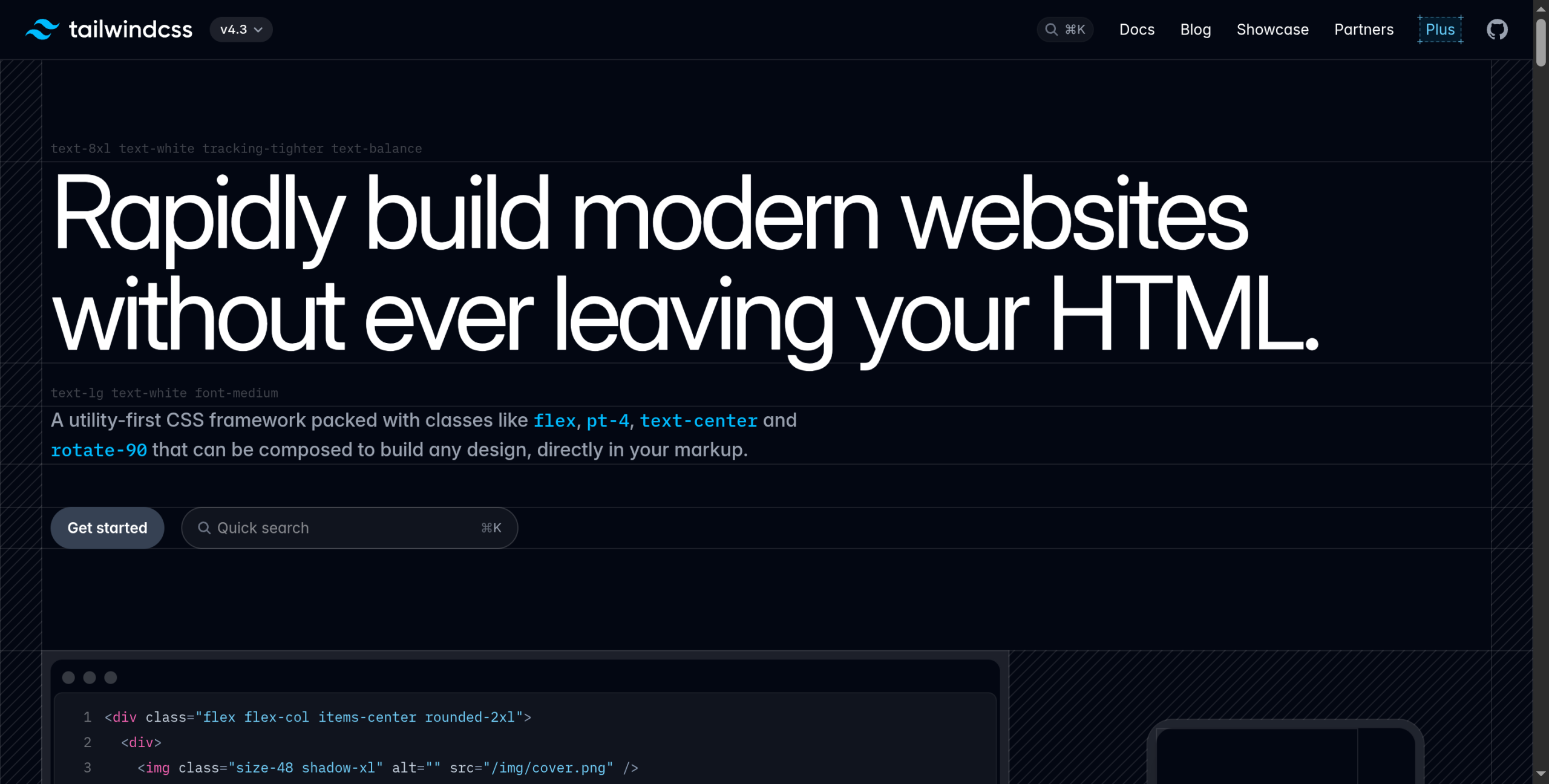

Here is the twist a lot of coverage glossed over. Popularity and revenue moved in opposite directions. The more a tool becomes the default, the more everyone expects the core to be free, and the harder it gets to sell the paid extras on top. A developer on r/webdev summed up the disbelief that ran through the whole thread: used on millions of sites, millions of downloads a week, yet the company still could not turn that into a business.
How AI Quietly Broke the Business Model
Tailwind Labs did have a paid product. It sold component libraries and templates, the polished building blocks that saved teams from designing every button and modal from scratch. That was the money. Then the money left.
Wathan has said AI coding assistants wiped out roughly 80% of the company’s revenue in under two years, which forced layoffs down to a skeleton crew. The mechanism is almost too neat. Ask a coding assistant to build a pricing page in Tailwind and it will generate the markup for you, trained on the very docs and patterns Tailwind published for free. The assistant does the job the paid templates used to do. Nobody buys the templates. The framework gets used more, and the business that maintained it gets paid less.
That is the quiet part worth sitting with. This was not a project nobody wanted. It was a project almost everybody used, undone by a tool that learned from its own generosity.
Why “A Stable Long-Term Home” Should Give You Pause
Shopify’s framing is warm. President Harley Finkelstein welcomed the team and stressed that Shopify bet on Tailwind early and now gives it a permanent home, a point picked up in coverage of the deal. Developers, being developers, translated the PR immediately: “stable long-term home” is what you say when a beloved project could not survive on its own.
The reassurances are real, and they matter. MIT license intact, same maintainers, existing customers keep access. But read the fine print. New sign-ups to the commercial tier are closed. Shopify is not buying Tailwind to grow a template business. It is absorbing a strategic dependency and keeping the lights on. That is a rescue, and rescues only happen when something was drowning.
What This Means If You Build on Free Tools
Most software today is a stack of free dependencies maintained by people you will never meet. Tailwind is a reminder to treat that reality as a real risk, not a given. A few things worth checking on the tools your projects lean on:
- Who actually pays for it. A tool backed by a healthy paid product, a foundation, or a big corporate sponsor is safer than one funded by hope and a Patreon.
- How many people maintain it. A framework carried by one or two burned-out maintainers is one bad month from going stale.
- Whether you could survive a freeze. If the project stopped updating tomorrow, would your app still ship? Pinning versions and keeping a migration path in mind costs little now and saves a scramble later.
- What an acquisition would change. Ownership changes happen. Knowing whether a tool is MIT-licensed, and therefore forkable, tells you how trapped you would be.
None of this means avoid open source. It powers almost everything, and that is a good thing. It means know which free tools are load-bearing in your work, and keep an eye on the health of the teams behind them.
The Harder Question for Open-Source Maintainers
For the people who build these tools, the Tailwind story lands differently. It suggests the classic open-core playbook, give away the framework and sell the premium layer, may be getting squeezed from a direction nobody planned for. When an assistant can generate the premium layer on demand, what exactly is left to sell?
There is no clean answer yet. Some maintainers will lean harder on corporate sponsorship. Some will accept that an acqui-hire by a company that depends on their work is the realistic finish line. Others will keep building for love and let the funding sort itself out, which is how a lot of the internet quietly got built in the first place. Turns out that model was always more precarious than it looked.
Frequently Asked Questions
Is Tailwind CSS still free after the Shopify acquisition?
Yes. Tailwind CSS remains free and MIT-licensed, and the original team continues to maintain it under Shopify. The main change is that new sign-ups to the paid commercial tier are closed, while existing paid customers keep their access.
Why did Tailwind sell if it was so popular?
Popularity did not translate into revenue. The company’s paid templates and component libraries lost roughly 80% of their revenue in under two years as AI coding assistants began generating the same kind of Tailwind markup for free, forcing heavy layoffs before the sale.
Did Shopify buy the Tailwind social media scheduling app?
No. Shopify acquired Tailwind Labs, maker of the Tailwind CSS framework for web developers. The Tailwind social-media scheduling and creator-analytics app is an unrelated company and was not part of this deal.
Should I stop using Tailwind CSS because of the sale?
There is no immediate reason to. The framework is still maintained and still open source. The sensible move is the same as with any core dependency: track the project’s health, pin your versions, and know that its MIT license means you could fork it if direction ever changed.
What does this mean for other free developer tools?
It is a signal that free tools funded by a thin paid layer can be vulnerable when AI erodes that paid layer. It is worth knowing which of the free tools you depend on have durable funding and enough maintainers to keep going.
Final Takeaway
Tailwind CSS is not going anywhere, and that is genuinely good news for the millions of sites built on it. The lesson sits one layer down. A tool can win the entire market and still lose the business, and when that happens the project survives only if someone with deep pockets decides it should. Before you lean your next project on a free framework, it is worth asking a plain question: if the people maintaining this walked away next month, what would I do? For more on the platforms shaping how the web gets built, browse Visboo’s Technology section.