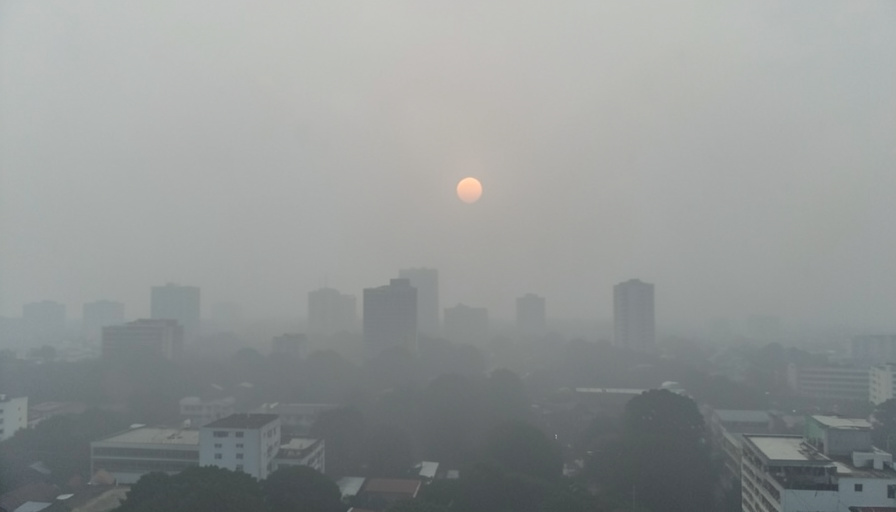
The sky turns a flat grey-orange, the horizon disappears, and your throat starts to scratch. Southeast Asia’s haze season is back, and this year forecasters warned it would be a bad one.
Smoke from forest and peatland fires in Indonesia has drifted across the region again, pushing air quality into the unhealthy range in parts of Malaysia, Singapore, and beyond. In Singapore, the central region’s air quality reading crossed into “unhealthy” territory in mid-September for the first time in about seven years. If you are anywhere under this haze, the useful questions are simple: how bad is it, and what should you actually do? Here is the practical version.
The Short Version
Fires in Indonesia’s Sumatra and Kalimantan regions are sending smoke across Southeast Asia, and 2026 was flagged in advance as a high-risk haze year. Air-quality readings have hit the unhealthy band in several areas, and authorities have issued advisories and closed some schools. The core protective steps are the same everywhere: wear a properly fitted N95 or KN95 mask outdoors, keep windows closed and run an air purifier indoors, cut outdoor activity, and take extra care with children, older adults, and anyone with asthma or heart conditions. Always follow your local agency’s live readings, because the haze shifts hour to hour.
What’s Actually Happening
The haze is transboundary smoke: fires burning in Indonesia, concentrated this year in southern Sumatra and West, Central, and South Kalimantan, carried by winds into neighboring countries. Regional monitoring centers have tracked the smoke drifting into Malaysia, Singapore, Brunei, and the Philippines. According to reporting on Singapore’s readings, the country’s National Environment Agency recorded a central-region reading of 102 on September 14, its first islandwide move into the unhealthy band in roughly seven years.
In Malaysia, readings in parts of Sarawak spiked far higher, prompting school closures across a number of districts. The specifics change daily, which is exactly why fixed numbers matter less than checking your local agency in real time.
Why 2026 Is a Higher-Risk Year
This was not a surprise. The Singapore Institute of International Affairs, in its Haze Outlook 2026, gave the year a rare “Red,” or high-risk, rating, only the second such rating since 2019. The reasoning is climate-driven: a returning El Niño pattern combined with a positive Indian Ocean Dipole tends to produce a longer, drier season, which dries out peatlands and makes fires larger and harder to put out. Dry peat is the key ingredient, because it smolders and produces enormous amounts of smoke.
PSI, API, AQI: How to Read the Numbers
Each country uses its own index, which trips people up. They measure similar things but are labeled differently.
| Index | Used in | Unhealthy range |
|---|---|---|
| PSI (Pollutant Standards Index) | Singapore | 101-200 unhealthy; 201-300 very unhealthy |
| API (Air Pollutant Index) | Malaysia | 101-200 unhealthy; 201-300 very unhealthy; above 300 hazardous |
| AQI (Air Quality Index) | Philippines and many others | 101-150 unhealthy for sensitive groups; 151+ unhealthy |
The practical rule of thumb: once your local index passes about 100, sensitive groups should limit outdoor time, and as it climbs past 150 to 200, everyone should. In Malaysia, outdoor activities are generally halted when the API tops 100, and schools close when it passes 200.
How to Protect Your Household
You cannot clear the sky, but you can control the air you breathe most of the day. The steps that actually work, in line with WHO guidance on air pollution:
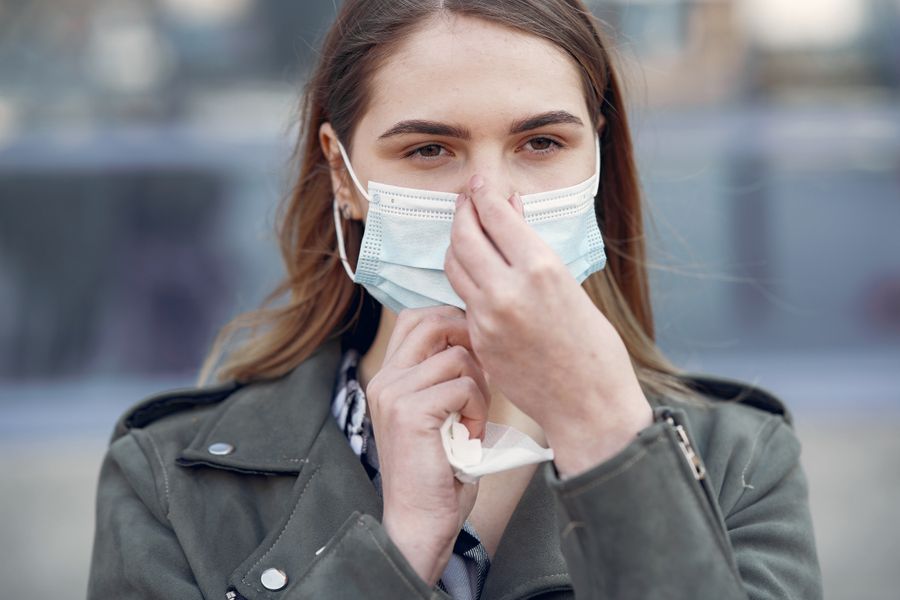
- Wear the right mask outdoors. An N95 or KN95 that seals to your face filters fine smoke particles. A surgical or cloth mask does little against haze, so it is not a substitute.
- Seal your indoor air. Keep windows and doors closed. If you have a purifier with a HEPA filter, run it, and size it to the room; a unit rated for a larger area clears the air faster.
- Cut outdoor exertion. Skip the outdoor run or sports. Heavy breathing pulls more smoke deep into the lungs.
- Protect the vulnerable first. Children, older adults, pregnant women, and anyone with asthma, COPD, or heart disease feel haze soonest and hardest. Keep them indoors and keep rescue inhalers close.
For more family and household guidance, see Visboo’s Family & Personal section.
When to Keep Kids Home, and When to See a Doctor
Follow your local threshold for school closures rather than guessing; where authorities set one, such as Malaysia’s API 200, treat it as the line. Mild irritation, itchy eyes, a scratchy throat, a light cough, is expected in haze and usually eases indoors with clean air. Treat these as reasons to see a doctor promptly: real difficulty breathing, chest tightness or pain, a persistent wheeze, or an asthma attack that a reliever inhaler does not settle.
This article is general information, not medical advice. Air quality changes hour to hour, so always follow official local advisories, from Singapore’s NEA, Malaysia’s DOE and APIMS, or the Philippines’ DENR and DOH, over any figure here, and consult a healthcare professional for symptoms or specific health conditions.
Frequently Asked Questions
What is causing the haze in Southeast Asia?
Smoke from forest and peatland fires in Indonesia, mainly in Sumatra and Kalimantan, is being carried by winds into Malaysia, Singapore, and other neighboring countries. Dry conditions in 2026 made the fires larger and the smoke heavier than usual.
What mask should I wear for haze?
An N95 or KN95 respirator that seals to your face, because it filters the fine particles in smoke. Surgical and cloth masks offer little protection against haze and should not be relied on outdoors.
What do PSI and API numbers mean?
They are air-quality indices. Singapore uses PSI and Malaysia uses API, but both flag “unhealthy” air roughly once the reading passes 100, with higher bands for very unhealthy and hazardous. Check your own country’s live index rather than a fixed number.
Is it safe to exercise outdoors during haze?
It is best to avoid outdoor exercise when readings are unhealthy, since heavy breathing draws more smoke into the lungs. Move workouts indoors to a space with filtered air until the air quality improves.
Who is most at risk from haze?
Children, older adults, pregnant women, and people with asthma, other lung conditions, or heart disease are most vulnerable. They should stay indoors with clean air, limit exertion, and keep any prescribed medication or inhalers on hand.
What To Do Next
Check your local air-quality index now, and set it as a habit for as long as the haze lasts, because it moves quickly. Have properly fitting N95 masks ready, keep indoor air sealed and filtered, and put the vulnerable people in your home first. The smoke will clear when the rains and wind shift, but until then, the air inside your own four walls is the part you can actually control. For ongoing health coverage, browse Visboo’s Health section.