
US diesel just set an all-time price record, and the ripple starts long before it reaches your grocery receipt.
The number to know is $5.967 a gallon. That was the national average for on-highway diesel in the week of September 7, up almost 37 cents in seven days, and it edged past the old record from June 2022. Retail trackers tell an even louder version of the story: the daily pump average crossed $6 a gallon for the first time ever around September 11, and a few California stations simply ran out of room on the sign, capping their dispensers at $9.999.
The Short Version
Diesel set a nominal record in September 2026 because of a refining crunch, not a crude-oil shortage. Oil itself sits near $100 a barrel, below its inflation-adjusted highs, yet the cost of turning that oil into diesel blew out. Most freight contracts pass that cost through as a fuel surcharge pegged to the government’s weekly diesel figure, so the spike travels from the pump into shipping bills and then into the price of almost anything that arrives by truck. Owner-operators on the spot market and the roughly 4.8 million households that heat with oil tend to feel it first.
What a “Record High” Actually Means Here
Two different numbers are getting called a record this week, and they measure slightly different things. Keeping them straight matters, because only one of them sets your shipping bill.
The first is the weekly on-highway average from the Energy Information Administration, published every Monday. That is the benchmark freight contracts are written against, and at $5.967 it topped the June 2022 peak of $5.810 for the first time. The second is the daily national pump average from AAA and GasBuddy, which is what a driver sees when they pull in. That figure crossed $6 a gallon in mid-September, a level it had never reached before.
| Benchmark | Figure | What it tracks |
|---|---|---|
| EIA on-highway weekly average | $5.967/gal (week of Sep 7) | The peg most fuel surcharges use |
| Prior all-time record (June 2022) | $5.810/gal | The mark it just passed |
| AAA/GasBuddy daily pump average | Crossed $6.00/gal (~Sep 11) | What drivers pay at the station |
| One year ago | ~$3.70/gal | The start of a 60%-plus climb |
Why This Record Is Different From 2008
Here is the part most coverage skips. The last time fuel felt this brutal, crude oil was the villain, spiking toward $147 a barrel in 2008. This time crude is comparatively calm. What broke was the refining step in the middle.
Refineries take crude and split it into gasoline, jet fuel, diesel, and other products. When the margin on that conversion, the crack spread, jumps past $100 a barrel while crude stays near $100, you know the squeeze is happening downstream of the oil well, not at it. Energy analysts point to a stack of pressures hitting at once: US refineries running flat out near 98 percent utilization, roughly 1.7 million barrels a day of domestic refining capacity shut down for good since 2020, disrupted diesel exports out of Russia, and tight shipping through the Strait of Hormuz. Refiners have also been tilting output toward jet fuel, which competes with diesel for the same molecules.
The practical takeaway: because this is a distillate-supply problem rather than a crude problem, it does not fix itself the moment oil ticks down a few dollars. It clears when refining capacity catches up, and that is slow.
How a Fuel Surcharge Actually Works
Most people never see a fuel surcharge, but it is the mechanism that decides who absorbs a diesel spike. A typical freight contract bakes a base fuel cost into the line-haul rate, usually somewhere around $1.20 to $1.50 a gallon. Everything above that threshold gets billed separately as a per-mile surcharge that steps up as diesel climbs, recalculated off that Monday EIA number.
The rough math looks like this: take the current diesel price, subtract the contract’s base, then divide by an assumed fuel economy, often 6.0 to 6.5 miles per gallon for a loaded truck. As an illustration only, ($5.967 minus $1.25) divided by 6.5 lands near 73 cents of surcharge per mile. On a 2,000-mile coast-to-coast run, that is more than $1,400 in fuel cost riding on top of the freight rate. Freight-industry analysts note that small gaps in how these tables are set, an outdated mpg assumption or a stale base, quietly cost carriers real money on every load.
Who Ends Up Paying the Surcharge
This is where the record stops being an abstract chart and starts sorting winners from losers. Spot-market truckload rates are set by supply and demand, not by fuel. So when diesel spikes while spot rates stay flat or fall, the surcharge does not automatically travel with the load.
Contract carriers with proper fuel-surcharge clauses are largely insulated. Owner-operators and small fleets living on the spot market are not, and they say so bluntly. One driver on r/Truckers described fuel jumping by roughly $600 a week, north of $12,000 a month, on steady long-haul work. Others report their companies clamping down in response, banning idling and cutting personal use of trucks on home time to claw back every gallon. Not gonna lie, that is a grim way to run a small business, and it is the kind of margin pressure that pushes marginal operators off the road entirely.
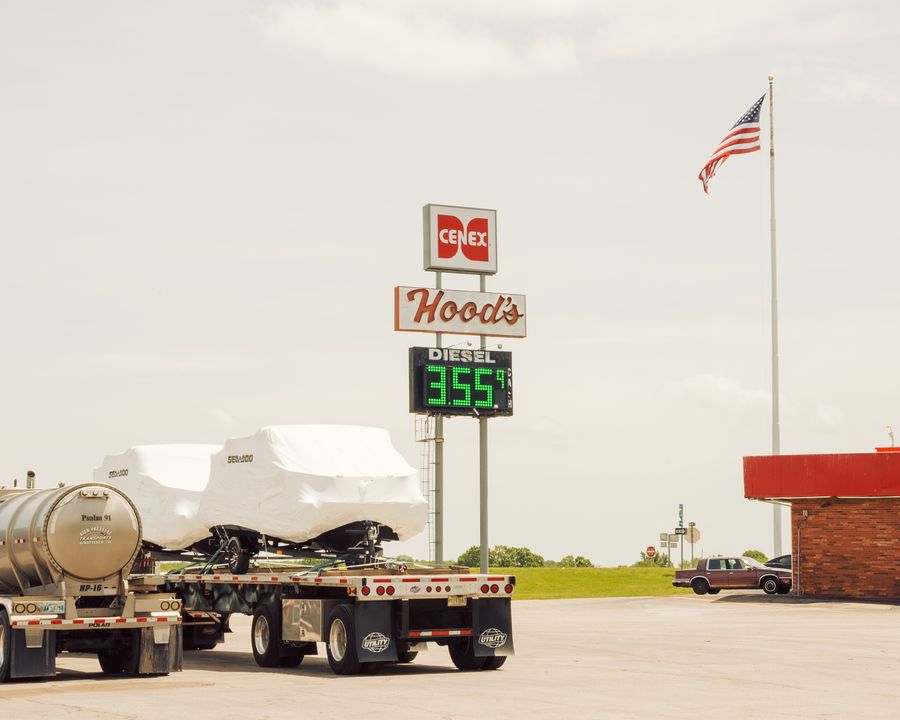
From the Pump to Your Porch
Diesel is the fuel underneath the economy most of us never think about. It moves freight, runs farm equipment, and, dyed a different color, heats homes. When it sets a record, the cost does not stay in the trucking lane.
Fuel runs somewhere between 15 and 30 percent of the cost of getting food to a store, which is why economists keep warning that diesel “gets into just about everything.” Groceries, building materials, and last-mile delivery fees all sit downstream of it. National reporting has flagged the same throughline: a record at the diesel pump becomes a slow, broad nudge upward on prices you actually pay.
Commuters are not off the hook either. Anyone driving a diesel car is watching the fuel-economy advantage that justified the purchase basically evaporate, and diesel spikes usually drag gasoline along for company. Then there is winter. Heating oil is essentially diesel, so households in the Northeast that burn it are staring down a bill that tracks this same record. For related coverage, browse Visboo’s Finance section.
What to Watch Next
A few signals will tell you whether this eases or digs in. Keep an eye on the Monday EIA diesel print, since a second and third weekly increase would confirm the surcharge math is not a one-week blip. Watch refinery utilization and any news of capacity coming back online, because that is the real release valve. And if you run or hire freight, this is the moment to check that your surcharge table uses a current base and a realistic mpg assumption rather than numbers set years ago.
This article is for general information only and is not financial advice. Fuel prices move quickly, so confirm current figures before making budgeting or business decisions, and consult a qualified professional when needed.
Frequently Asked Questions
Is diesel really at an all-time high in 2026?
Yes. The EIA’s weekly on-highway average reached $5.967 a gallon in the week of September 7, 2026, passing the previous record of $5.810 set in June 2022. Daily pump trackers from AAA and GasBuddy showed the national average crossing $6 a gallon for the first time around September 11.
Why is diesel so expensive when oil prices are moderate?
Because the pressure is in refining, not crude. Oil sits near $100 a barrel, but the margin to convert crude into diesel spiked past $100 as refineries ran at capacity, some plants stayed offline, and global diesel supply tightened. That is why the record did not need an oil-price shock to happen.
What is a fuel surcharge and who pays it?
A fuel surcharge is an extra per-mile fee on freight that rises with diesel prices, usually pegged to the weekly EIA number. Shippers pay it to carriers under contract. Small carriers and owner-operators hauling on the spot market often cannot pass the full cost through, so they absorb more of the spike.
Will record diesel prices raise grocery prices?
Most likely a gradual push rather than an overnight jump. Fuel is a meaningful share of the cost to move and stock food, so a sustained diesel record tends to nudge grocery and delivery prices up over the following weeks rather than all at once.
Does this affect home heating costs?
It can. Heating oil is chemically close to diesel and its price tracks the same market. Households that heat with oil, concentrated in the Northeast, should expect winter delivery prices to reflect the current record.
What This Means
The headline is the $6 pump sign, but the number that actually drives your costs is the quieter EIA figure that freight contracts are built on. As long as the squeeze sits in refining rather than crude, cheaper oil alone will not rescue the price, and the surcharge will keep threading its way from the truck stop into the checkout line. Track the Monday print, and if you move freight, sanity-check your surcharge table before the next load leaves the yard.