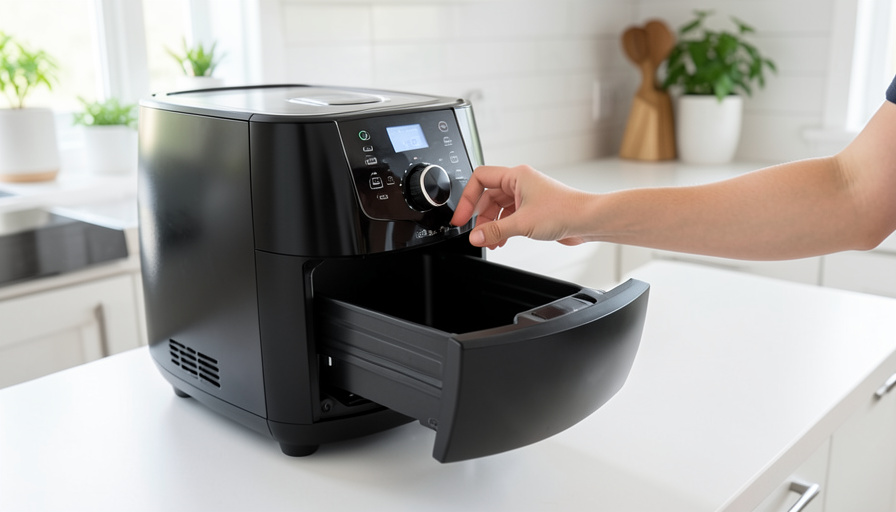
The fan hums, the display glows, and twelve minutes later your fries are still pale and limp. An air fryer that turns on but will not heat is one of the most common appliance headaches, and the good news is that most causes are cheap or free to fix. A loose basket, the wrong setting, or a safety cutoff doing its job accounts for far more of these than a burned-out part. Work through these 15 checks in fix-first order, starting with the five-second stuff and ending with the repairs, and unplug the unit before you touch anything inside.
Heat is easy to misjudge in an air fryer, because there is no flame and no glowing coil you can see through the door. Before you assume the worst, rule out the simple explanations, then move down the list only as far as you need to.
The Short Version
An air fryer that powers on but does not heat is most often a settings or seating problem: the basket is not pushed fully in, the temperature or mode is wrong, or a safety cutoff has tripped after overheating. Grease buildup on the heating element and blocked vents are close behind. Only after those do you get to the real failures, a dead heating element, a bad thermostat or sensor, or a blown thermal fuse, which cannot be reset and needs replacing. Start with the free checks, and stop the moment heat comes back.

The 15 checks at a glance
- Confirm it is not already heating
- Check the temperature and cooking mode
- Press start, and make sure it is not paused
- Push the basket all the way in
- Stop overcrowding the basket
- Preheat before you judge it
- Unplug it for ten minutes to reset
- Let it cool if it overheated
- Clear the air vents
- Clean grease off the heating element
- Wipe the temperature sensor
- Check the outlet, cord, and GFCI
- Inspect the heating element for damage
- Suspect a blown thermal fuse
- Know when to replace it
1. Confirm it is not already heating
Because an air fryer heats with a hidden element and a fan rather than a visible flame, “not heating” is easy to get wrong. Run it empty at a high setting for five minutes, then carefully open it and feel the wave of hot air, or set a slice of bread inside and see if it toasts. If it browns bread or blasts heat, the appliance is fine and your recipe or timing is the culprit. If it stays cool, keep going.
2. Check the temperature and cooking mode
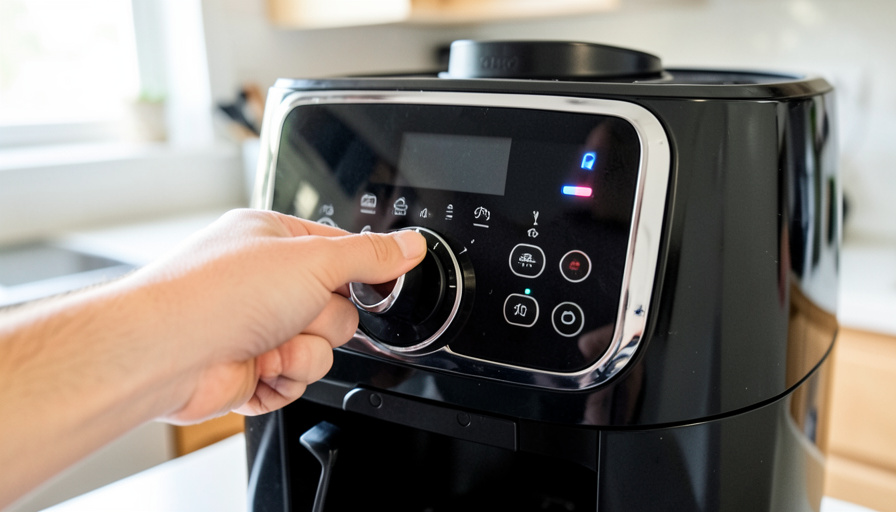
Modern models have modes that run cool on purpose. Dehydrate, reheat, and keep-warm settings sit at low temperatures, so if one of those is selected, the machine is behaving correctly and just not getting hot. Set a normal cook temperature, around 375 to 400 degrees, and pick the standard air-fry mode. It is an easy thing to bump by accident, especially on touch panels where a stray tap changes the program.
3. Press start, and make sure it is not paused
On many air fryers the display lights up when you set a time and temperature, but nothing heats until you press start. Others pause automatically the instant you slide the basket out, which is a safety feature, and they need a nudge or a re-close to resume. If your unit went quiet after you checked the food, push the basket back in and confirm the timer is counting down rather than sitting still. A paused cycle looks exactly like a broken one.
4. Push the basket all the way in
Almost every air fryer has a safety interlock that stops the heating element unless the basket or drawer is fully seated. A basket that is a hair short, or blocked by a crumb or a stuck accessory, leaves the switch open and the heat off. Pull the drawer out and push it firmly back until it clicks or seats completely. Check that nothing, food, a liner, or grease, is keeping it from closing the last few millimeters.
5. Stop overcrowding the basket
A basket packed to the brim blocks the airflow the whole system depends on, so the food stays pale and the appliance can trip its own overheat protection. If you loaded it full of cold fries or a dense block of food, the machine may not seem to heat at all. Cook in a single layer with room around each piece, and if the unit shut down under a heavy load, unplug it and let it cool before trying again with less inside.
6. Preheat before you judge it
Some recipes and some models assume a preheat, and a cold start can feel like a dead machine for the first few minutes. Run the empty air fryer at your target temperature for three to five minutes before adding food. If it comes up to temperature during a preheat but seems weak once loaded, the real issue is likely overcrowding or a low setting rather than a heating fault.
7. Unplug it for ten minutes to reset
A soft glitch in the control board can leave the display working while the heat stays off. The fix is the oldest one in the book: unplug the air fryer, wait about ten minutes so any capacitors fully discharge and a tripped protection can settle, then plug it back in and try again. This clears more no-heat faults than people expect, and it costs nothing.
8. Let it cool if it overheated
Many air fryers have a resettable thermal cutoff that shuts the element off when the inside gets too hot, then restores heat once things cool down. If yours quit mid-cook or after back-to-back batches, it may be too hot to run. Unplug it, leave it open on the counter for 30 to 60 minutes, and try again. If it works after cooling, watch for the cause, usually blocked vents or overcrowding, so it does not keep tripping.
9. Clear the air vents
Air fryers pull air in and push hot air out through vents, usually on the back or top. When grease, dust, or a wall pushed too close blocks those vents, the machine overheats and cuts the element to protect itself. Unplug it, check the intake and exhaust for buildup or obstructions, wipe them clean, and give the unit several inches of clearance on all sides before you run it again.
10. Clean grease off the heating element
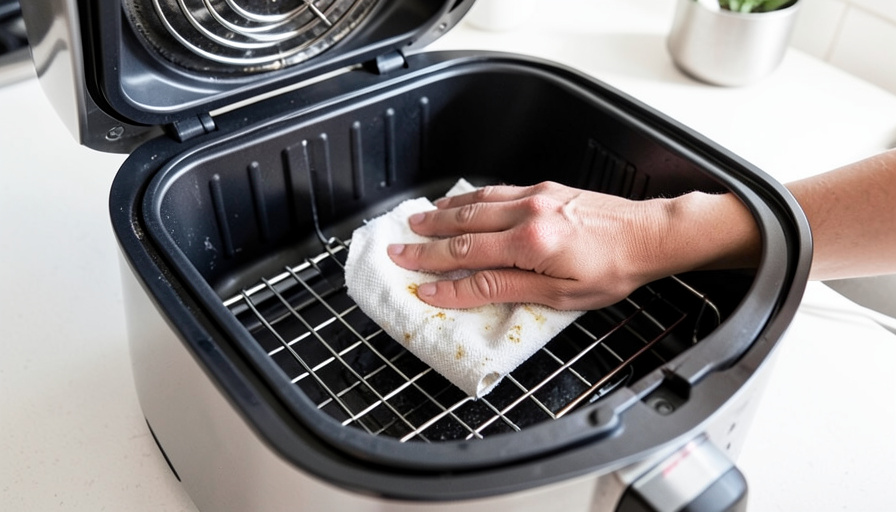
The heating element sits at the top of the cooking chamber, and a thick coat of baked-on grease acts like insulation, so the heat never reaches your food and residue can smoke or trip protection. With the unit unplugged and fully cool, gently wipe the element and the chamber with a damp cloth and a little dish soap, avoiding harsh scraping that could damage the coil. A clean element transfers heat far better and removes a common fire risk at the same time.
11. Wipe the temperature sensor
Near the element is a small metal probe, the temperature sensor, that tells the air fryer how hot it is. If grease cakes that probe, it can misread the temperature and decide the chamber is already hot enough, so it never calls for more heat. While you have the unplugged, cooled unit open for cleaning, wipe that probe clean along with the element. It is a two-second step that fixes a surprising number of weak-heat complaints.
12. Check the outlet, cord, and GFCI
A partial power problem can spin the fan while starving the element, which needs far more current. Plug the air fryer directly into a known-good wall outlet, not a light-duty extension cord or power strip, since air fryers draw a lot and can trip or underfeed on those. Test the outlet with another appliance, and if it is on a GFCI or breaker that tripped, reset it. Damaged cords or loose plugs belong on the replace list, not the workaround list.
13. Inspect the heating element for damage
If the basics check out, look at the element itself with the unit unplugged and cool. A heating element that is cracked, blistered, or has a visibly broken coil will not heat evenly or at all. Some elements are user-visible at the top of the chamber; others are sealed. If you can see obvious damage, the element is the likely failure, and a repair guide such as iFixit’s air fryer troubleshooting can show whether it is serviceable on your model or a job for a technician.
14. Suspect a blown thermal fuse
If the fan runs, the panel lights, and nothing you have tried brings back heat, especially after an overheating episode, a blown thermal fuse is a strong suspect. The thermal fuse is a one-time safety device that permanently breaks the heating circuit when temperatures spike, to prevent a fire. Unlike the resettable cutoff, it cannot be reset, only replaced. Testing and replacing it means opening the housing and using a multimeter, so it is a job for someone comfortable with appliance repair, and never a part to bypass.
15. Know when to replace it

Some no-heat cases are a signal to stop. If you smell burning plastic, see scorch marks, notice melted or exposed wiring, or the unit is tripping your breaker, unplug it and do not use it again. On a budget air fryer that is out of warranty, a new one usually costs less than parts and labor for a dead element, board, or fuse, and it removes any safety doubt. If it is still under warranty, contact the maker rather than opening it, since a DIY repair can void your coverage.
This article is general guidance, not a substitute for professional appliance repair. Always unplug an air fryer and let it cool before inspecting or cleaning it, do not bypass safety devices like the thermal fuse, and stop using any appliance that shows burning, sparking, or damaged wiring. When in doubt, consult a qualified technician or the manufacturer.
What To Know
- Most no-heat cases are a loose basket, the wrong mode, or a tripped safety cutoff, not a dead part.
- Confirm it truly is not heating first, since air fryers give off no visible flame.
- Unplugging for ten minutes and letting an overheated unit cool fix many faults for free.
- Grease on the element or sensor and blocked vents are common, cleanable causes.
- A blown thermal fuse cannot be reset and must be replaced, and burning smells or scorch marks mean stop and replace.
Frequently Asked Questions
Why does my air fryer turn on but not heat up?
The most common reasons are a basket that is not fully seated, so the safety switch keeps the element off, a low temperature or a cool mode like reheat, or a safety cutoff that tripped after overheating. Grease on the heating element and blocked vents also cause it. Less often, the heating element, thermostat, or thermal fuse has failed. Work from the simple settings and seating checks toward the component failures, since the easy causes are far more common.
How do I reset an air fryer that stopped heating?
Unplug it from the wall, wait about ten minutes, then plug it back in and try again. If it overheated, leave it open to cool for 30 to 60 minutes first. This clears soft control-board glitches and lets a resettable thermal cutoff restore heat. There is usually no dedicated reset button. If unplugging and cooling does not help, move on to cleaning the element and vents and checking the power.
Can I replace the thermal fuse in my air fryer myself?
Only if you are comfortable with appliance repair. A thermal fuse is a one-time safety part that cannot be reset, so a blown one must be replaced, which means opening the housing and testing with a multimeter. If you are not experienced, have a technician do it, and never bypass or jump the fuse, since it is there to prevent a fire. On a cheap, out-of-warranty unit, replacing the whole air fryer is often the safer call.
Is it worth repairing an air fryer that won’t heat?
It depends on the price and the fault. Free fixes like reseating the basket, cleaning the element, or resetting the unit are always worth trying first. But if the failure is a dead element, control board, or thermal fuse on an inexpensive, out-of-warranty air fryer, the parts and labor can cost more than a replacement. If it is still under warranty, contact the manufacturer instead of repairing it yourself.
My air fryer’s fan works but there’s no heat. What does that mean?
A running fan with no heat points away from a total power failure and toward the heating circuit. The usual suspects, in order, are a not-fully-seated basket, a tripped safety cutoff that needs cooling, grease on the element or sensor, and finally a failed element or a blown thermal fuse. Work through the seating, cooling, and cleaning checks first, since a fan that still spins usually means the appliance has power and one specific part of the heat path is the problem.
What To Do Next
Start at check one and stop the second heat returns. Reseat the basket, set a proper temperature, reset the power, and clean the element and vents before you reach for a screwdriver. If heat still will not come back after the free checks, weigh a repair against a replacement, and put safety first with any burning smell or visible damage. For more home and kitchen fixes, browse the home improvement section, and the lifestyle section has more everyday how-tos.